



IThere is a stage in every serious B2B deal that almost nobody talks about.
It’s not the first call — where rapport is built, energy is exchanged, and both sides evaluate credibility.
It’s not the final negotiation — where budgets are confirmed, terms are refined, and the deal is either signed or abandoned.
It’s the middle!
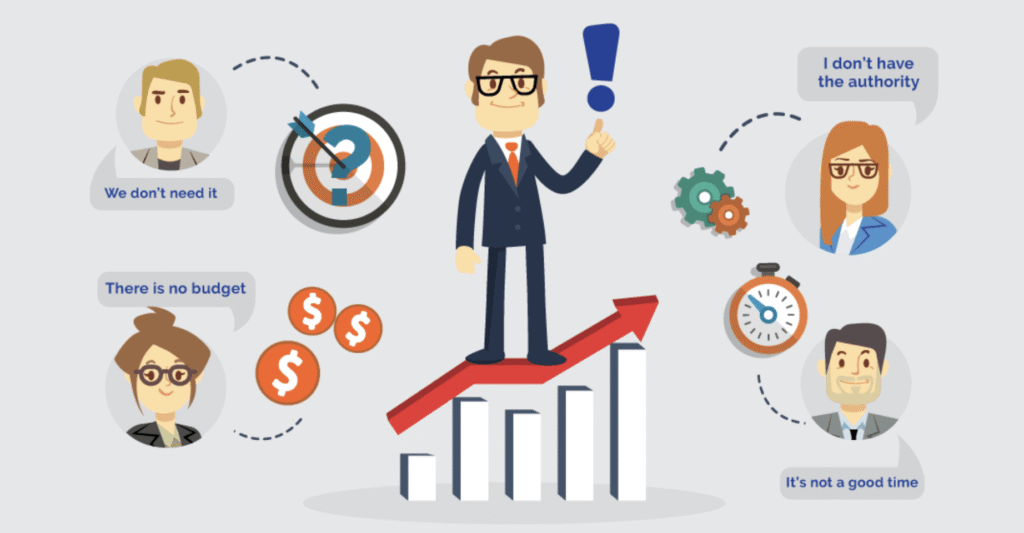
Every sale has five basic obstacles: no need, no money, no hurry, no desire, no trust.
Zig Ziglar, American author, salesman, and motivational speaker
And in high-ticket B2B environments — especially where the sales cycle extends beyond a few days, beyond one or two calls, and into structured proposals, stakeholder reviews, financial scrutiny, and reputational risk — this middle stage determines everything.
I call it the silent stage.
Because this is where objections either surface clearly… or stay hidden until the deal quietly dies.
Phone calls absolutely matter. Early-stage calls establish tone, authority, and human chemistry. Without that, you are just another vendor in an inbox. And at the end, calls matter again — alignment, negotiation nuance, subtle hesitation — those are vocal experiences.
But between those two points lies Phase II.
Phase II is where enthusiasm meets fear.
And fear rarely speaks clearly on a live call.
Most professionals avoid direct confrontation. They do not enjoy saying out loud:
“Your pricing makes me uncomfortable.”
“I’m not convinced your team can execute.”
“I’m afraid of making the wrong decision internally.”
“This feels risky for my reputation.”
Instead, they soften. They defer. They say they need time. They say they are reviewing options.
On a call, social pressure distorts clarity.
When a prospect writes you an email outlining concerns, something psychological shifts; writing activates reflection instead of reaction. It reduces the ego exposure of real-time disagreement. It gives the buyer space to articulate uncertainty without feeling socially cornered.
In high-ticket B2B deals, especially those requiring multi-page proposals, internal forwarding, and weeks of deliberation, this written layer becomes not optional, but critical.
Here are twelve reasons why.
1. Writing surfaces objections earlier. When you invite someone to outline concerns in an email, you are permitting them to be precise. Hidden objections become visible ones. Visible ones can be addressed.
2. Writing reduces confrontation anxiety. Most people do not like disagreeing live. Email lowers emotional temperature, allowing honesty.
3. You gain their exact internal language. The way they phrase concerns tells you how they are framing risk. That language becomes your roadmap.
4. Writing forces them to clarify their own thinking. Many objections dissolve simply because the prospect attempts to explain them logically.
5. Written threads allow internal alignment. High-ticket B2B deals rarely involve one decision-maker. Emails can be forwarded. Calls cannot.
6. Documentation builds accountability. Once concerns are written, they exist formally. They are no longer vague feelings.
7. Writing exposes real decision criteria. When you ask what must be true for the deal to move forward, the response reveals priorities.
8. It filters seriousness. Casual browsers avoid structured responses. Serious buyers engage.
9. It allows a strategic response instead of improvisation. In writing, you craft measured, structured answers rather than reacting emotionally.
10. It reduces call theater. Calls often feel productive but lack substance. Writing eliminates performative politeness.
11. It strengthens proposal discussions. In complex deals, proposals evolve. Written feedback refines alignment.
12. It creates commitment momentum. When someone invests effort into articulating concerns, they are psychologically stepping deeper into the process.

Now consider the alternative.
If you rely solely on calls during Phase II, you often enter a loop of pleasant conversations. The prospect sounds interesting. You schedule another call. They remain positive. Yet they never clearly articulate what is stopping them.
Weeks pass. Energy fades. Eventually, silence.
Ghosting in high-ticket B2B is rarely about rudeness. It is about unresolved objections that were never extracted.
There is another pattern worth observing.
If a prospect repeatedly resists writing — if they will speak for an hour but avoid summarizing concerns in a few paragraphs — that is often a red flag.
Serious enterprise buyers document decisions. They consult stakeholders. They request written clarity. They understand internal accountability.
When someone avoids writing, they may be avoiding commitment. They may lack internal alignment. They may not be the real decision-maker. Or they may simply not be serious.
In long sales cycles involving complex proposals, financial evaluation, and multi-layered discussions, writing becomes the bridge between rapport and revenue.
The rhythm of disciplined B2B sales looks like this:
The opening call establishes credibility.
The written middle extracts truth.
The closing call secures alignment.
If you skip the written middle, you are building momentum without structure.
And structure is what carries a deal across weeks, across stakeholders, across scrutiny.
In high-ticket B2B environments — where decisions exceed five or six figures, where reputations are involved, and where cycles stretch beyond a handful of days — clarity is currency.
Calls build connection.
Writing builds certainty.
Connection without certainty collapses.
Certainty without connection feels cold.
But when you control both — rapport at the beginning, structured written clarity in the middle, and decisive vocal alignment at the end — deals move faster, objections surface sooner, and ghosting becomes rare.
If you cannot get a prospect to articulate concerns in writing, you do not yet understand the deal.
And if you do not understand the deal, you are not advancing it — you are rehearsing it.
Serious revenue is built on clarity, not conversation.